
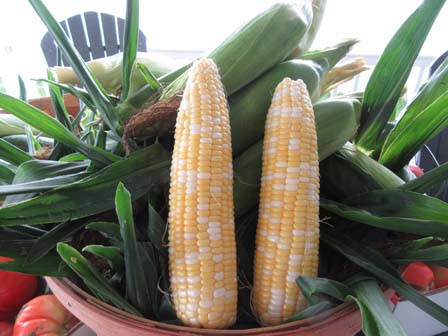
When I first decided to grow corn, I did not have high hopes. I figured I would get some green stalks, but never expected to get ears
that were the best I ever had. The first variety I tried was Silver Queen because I liked white corn. The ears were very large and plump.
I planted like 4 12 foot rows and got 60 really good ears. They were like eating a steak. That was how my corn journey began. My wife
was not as big of a fan of white corn, so I tried a variety called Ambrosia. It is a bi-color sweet corn that turned out to be amazing.
I am still no corn expert, but I had very good success every year. I attribute this to good soil. I still swear by using my Rooster's Organic
chicken manuer compost, along with Osmocote as a fertilizer, then mulched with sweet peat. I dont know a lot about all of the varieties,
but I think the requirements are probably about the same. At least 3 rows are needed for fertilization. I also learned that each silk strand
is connected to a specific potential kernel. The silk will catch the pollen from the male tassel allowing fertilization of each kernel. I also
learned about smut (corn fungus) that can grow on the ears. Corn smut is a fungal disease caused by Ustilago maydis, which infects
corn and forms large, swollen, grayish-black galls (smuts) on kernels, stalks, or leaves, essentially turning parts of the plant into
a mass of spores. While farmers often see it as a damaging blight, especially in sweet corn, in Mexico and other parts of Latin America,
these galls (known as huitlacoche) are a prized culinary delicacy, valued for their earthy, truffle-like flavor, and are used in dishes like
quesadillas and soups. I have not eatenany (yet).
Below are some images of the different stages of development in my little garden in the village. It does take up a lot of real estate, so I
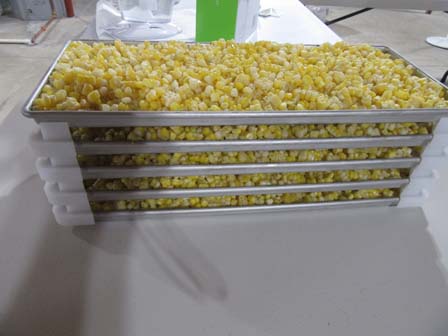
have decided to buy it local, and freeze drying it (amazing!) We cut it off the cob, and freeze dry, as well as freeze about 100 ears each year. 

Planted May 13th. Here they are May 25th Corn June 16th, already above knee high

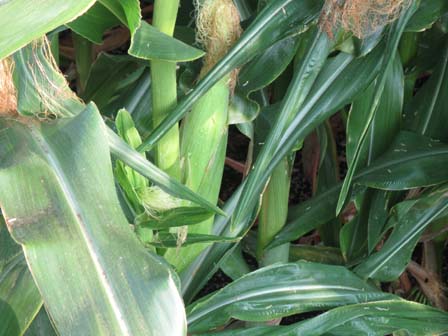
June 30th, over 5 feet tall Almost ready to pick July 21st
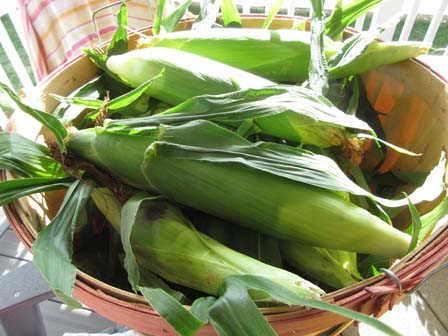
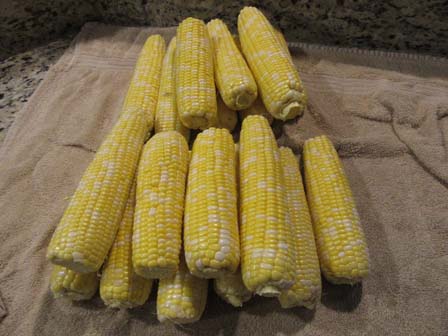
First Picking End of July Ready to Freeze, and Freeze Dry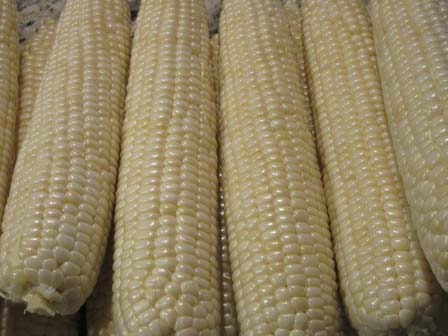
Silver Queen Ears Ready to go in Freeze Dryer